Tuesday, April 15, 2014

The Sea by John Banville – A Book Review

Claim to Fame : John Banville's books have won various awards. 'The Sea' is the 2005 Man Booker prize winner while his novel 'The Book Of Evidence' was shortlisted for the 1989 Booker prize.
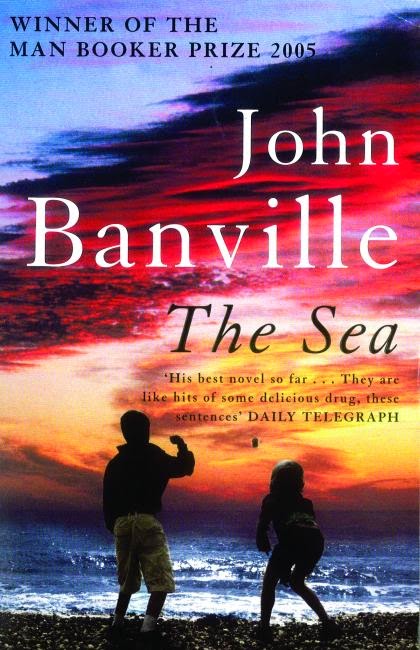
The Sea
            This is simply beautiful writing!
An incident. It rocks your world, shakes it, and torments you. More so when you have been a silent observer. The author, John Banville doesn’t present a major story with a gut wrenching plot. This novel is more a tale of feelings; it is a rendition of a widower’s life, of what is left of it, riding deep into the waves of his emotions, facing the tidal highs and lows of his past and present life, the turmoil in the depths of his loneliness. Max, the central character of this novel is deprived of the company of his only companion, his wife, snatched away from him by a fatal disease. He misses her and like a buzzing insect attracted to the lamp in a room only to be struck dead by the rotating blades of the fan, he comes to rest and live his life of solitude in the only place he has a strong memory of, the house of the Cedars by the sea.

A belonging to the sea is maybe more a matter of penance, than a matter of belonging for Max, of what has been taken away than what has been given. The author gleefully flirts; plays hide and seek traversing the lengths of Max’s past and present. His recollection of the Grace family from his childhood days and the impact they created on his psyche becomes an integral inseparable part of his memories. The insouciant behavior of the entire Grace family, right from the flirting mother, the carefree and unconcerned father, the impish and reckless son to the brattish daughter becomes incomprehensible for him but still he hangs along to create a so called social bearing on his character, to feel and experience acceptance.

The dying of his wife Anna, the death of her, the sole companion of his journey through his adult life during which he was with her, throws him into the throes and pangs of his past and he ends up living more there than here, in the present.

The narrative is like a child’s weaving of a string of beads from sundry things that he finds here and there, some of shape, others shapeless, lacking of a strict arrangement or like the seemingly meaningless endless helter-skelter running of a deer, deviating frequently from the flow. The author makes you wade through numerous rivers of the protagonist’s life before merging them in the sea.

No wonder a large population of book lovers hates the Booker winners like this one. You read most of the novel and wonder, “Why am I putting myself through this sad saga of this old man and his miseries when it is not half as interesting as I thought it to be”. But then, life is not always an engrossing plot or a clever story. This novel, its words, the thoughts are like a heartfelt beautifully written poem. Some of the sentences amaze you with their depth. It is like a melancholy song that you would like to hum, the one that strikes and spurs a feeling deep inside – that is the power of such brilliant writing!

Some beautiful lines from the book:
  • Perhaps all of life is no more than a long preparation for the leaving of it.
  • In those endless October nights, lying side by side in the darkness, toppled statues of ourselves, we sought escape from an intolerable present in the only tense possible, the past.
  • She was standing between me and the window, talking to another woman, and for a moment my eye had difficulty fixing a depth of focus, since it seemed that, of the two of them, Anna, being so much the bigger, must be much nearer to me than the one to whom she was speaking.

My rating : * * * * * * * * * * - 8/10


John Banville

Sunday, March 30, 2014

The Company of Women by Khushwant Singh – A Book Review

 Claim to Fame : Khushwant Singh has been the editor of 'The Illustrated Weekly' and the author of various novels including ‘Train to Pakistan’ and his autobiography ‘Truth, Love and a little Malice’. He was awarded the Padma Bhushan in 1974 which he returned after the attack of the Sikhs at the Golden Temple. His books 'The History of the Sikhs' is much acclaimed. Later he was awarded the Padma Vibhushan.

There were 2 reasons for me to pick up this book for a read.
  • I wanted something lighter to read after having read the hard hitting and duly affecting novel ‘Disgrace’ by J.M.Coetzee
  • As an ode to the lively author who passed away recently on 20th Mar 2014, at the age of 99, just a year short of his century.

Mohan Kumar, the protagonist, is a highly educated individual having immense business acumen. He is the eyeball candy, the Casanova of Delhi’s upper class social circuit. But alas, he is neither so lucky nor successful in his marriage. Having married into the family of one of the wealthiest business tycoons in Delhi, he gradually falls in the pits of his nagging wife and bears the brunt of her disrespectful family. This inevitably ends in separation and divorce in spite of having 2 wonderful kids from their wedlock.

            The novel is the journey of Mohans' sexual escapades, the unending journey of his libido. What started as a incognizant push into the lusty fires during his college days in America, makes him succumb to his effusive libido post his separation with his wife as he advertises for women, not proposing for marriage but to accompany him for a short duration, to share his bed on a contractual basis. As the cliche goes ‘He lives his life between his legs’.

            There is nothing much to write about the plain and unimaginative writing. I should have read the foreword and stopped there because that is the most truthful part of the book. The book is nothing more than a retiring 83 year old man’s nonsensical ostentation of his sexual fantasies, of placing him as the hero at the altars of his virile sex drive, of having the ‘Oh, wow, you have the longest’ THINGY. It is the rejoicing in fiction of the incapability in real life.
            The writing is truly amateurish and unimaginative. It almost feels like reading a Nancy Friday erotica. Sorry, but I guess I picked the wrong book to celebrate this distinguished personality’s colorful life. I guess ‘Train to Pakistan’ would have been an apt choice.

My rating        :           * * * * * * * * * * - 2/10

Khushwant Singh

Saturday, March 22, 2014

Disgrace by J.M.Coetzee – A book review

Claim to fame :
  • Disgrace is the winner of the Nobel prize in literature 2003 and winner of the 1999 Booker prize. Disgrace is now also a movie featuring John Malkovich.
  • Another one of his books, ‘Life & Times of Michael K’ has won the 1983 Booker prize and his book ‘Summertime’ was shortlisted for the 2009 Booker prize.

Disgrace - The Novel
            I am at a loss as to where to begin the praise. Is it the fact that such a context can be thought of that needs to be applauded more or the bold and intricate manner in which it has been sketched? Coetzee’s characters breathe and you feel the warmth of their breath. They are up, close, they touch you, mock you excite you, pull you down, their words reverberate in your ears, their hapless emotions trespass your mind, and their immaculate realism surprises you.

            David Lurie, a Communications professor at the Cape Technical University in South Africa, is 52, married twice, divorced twice with a distantly living grown up girl from his first marriage as the only person in the name of family. He is happily sorted and settled in his life.

            But a man has needs. Bodily needs. More so, a lonely man who has had no difficulties in the past. As long as he derives the pleasures through the payment gateway, everything is fine, but the abrupt dissociation from his favorite girl throws his settled life off balance. This results in an affair with a student of his who is less than half his age. When the word is out, it disrupts the entire balance of his life and he is in no mood to give any justification to anyone. He knows neither he nor she has wronged, but more importantly he knows that subjects like these are beyond the common comprehension of people and there is no point in making an attempt. He quits, forsakes everything in his current life and moves to the countryside, to his daughter Lucy’s dwelling.

            He is almost coming to terms with the slow and seemingly meaningless country life when a robbery and rape shakes his life yet again and invariably his daughter’s too. What pains him more than the horrific crime is the inane acceptance of it by Lucy. Why? Demeaning himself through a self imposed punishment for his disgrace in the city though he doesn’t hold himself responsible, he finds it overwhelming and impossible to comprehend Lucy’s reactions towards the incident, the entire matter of fact attitude shown by not only her but all around. And not only the incident, but the entire shameless, blunt and flamboyant display of power surrounding her farm, the effusive helplessness overexposed by Lucy is killing him, driving him crazy and to top it all, he is strictly restrained from doing anything about it. Lucy’s credence, he feels is not only stupid, but disastrous and suicidal. Why does she refuse to punish the wrong doers when he has so easily and readily punished himself? The worst part is that he cannot ease the pain; not off her, not off himself.

            The writing is so beautiful and bold that you feel the obstinacy, the angst, the helplessness, the pain and sorrow of both the lead characters though in completely different ways. You might just end up abhorring and ridiculing Lucy for her docile and meek mannerism. But, on second thoughts, you realize there is no right or wrong. What is escapism for some may be just treading on a peaceful path. What might look like foolish acceptance and cowardice might be the most befitting thing to do, might just be facing the circumstance and standing tall.
            
            Just like everyone claims to understand the Mahatma’s doctrines, teach them, preach them but when it comes to it, fail to act on them, follow them.

            This is my first Coetzee book and I am already a huge fan!

J. M. Coetzee

Saturday, March 15, 2014

Family Album by Penelope Lively – A book review

Family Album by Penelope Lively – A book review

Claim to Fame – Family Album was shortlisted for the Costa Awards 2009

Family Album - The Novel

Finally done with! Completed! 261 pages only but it seems like it’s taken me eternity to read this one (The fact that my mind was distraught due to sundry reasons could be behind this eternal consumption of time and the book or the authoress is not to blame)

            A big family - six children, mother father and an au pair. At Allersmead, a gigantic Victorian house from the pre First World War period, the reins of the household is in the hands of the lady of the house. Allison, an unflaggingly happy person believes strongly in family values and bonding. Her untiring resolve to raise a family and not the passion for love making is the reason for the number of children that there are. In spite of an aloof husband; a writer who chooses to spend not only his time but purposefully his life in his study writing on uncommon topics, Allison makes every effort to weave a quilt of happiness and family ties with the varied shapes, egos and personalities of her growing children.

            As the children grow up bearing stronger wings and turn by turn leave the Allersmead nest, they find themselves placed in different parts of the globe, quite successful in their chosen paths except for Paul. However, their distance from Allersmead is almost equivalent to the growing distance they feel from the family values, the togetherness values imbibed by their mother. This life that they have created for themselves bears no resemblance to their growing up days.

            And then there is this devastating secret, which is capable of destroying all family ties. A secret of the elders – who knows? Who doesn't? Should it be known? At what cost?

            An easy read by Penelope Lively. While, in the characters of Gina and Paul, I felt the author has been successful in injecting a riveting liveliness, the others seem a wee bit drab. At times in the novel, and more so when you have known what you to you ought to have known, a certain amount of dullness creeps in. Though every now and then the strong penning of emotions of the characters and the wittiness of the author goads you to carry on, overall, I felt it was an okay read.

My rating : * * * * * * * * * * (5/10)
Penelope Lively

Saturday, March 1, 2014

Highway - A film by Imtiaz Ali - A review

Highway - A movie review (*****)

Story and Direction : Imtiaz Ali
Cast : Randeep Hooda, Alia Bhatt
Music : AR Rahman
Lyrics : Irshad Kamil


“Jahan se tum mujhe laaye ho, mai wahan waapas nahi jaana chahti, jahan tum le jaa rahe ho, mai wahan jaana nahi chahti, lekin ye jo safar hai, abhi hai, ye raasta, mai chahti hu ke ye kabhi khatam na ho”

Freedom! What does it mean? Like all words and emotions today, freedom is subjective. Are we free? Are you? Am I? Can I drop these clothes of responsibility and wander with my naked thoughts away to the mountains where my heart belongs, where I find peace? Can I live my passion and just spend my time writing – maybe for nothing? How much money is enough? Am I crazy if I am not like you? Should I be scorned and loathed if my thoughts of normalcy go against your safe and cushioned and veiled life made up of the amalgamation of endless and varied impositions since birth? Should I be punished if I be myself? Am I obliged to laugh at every joke of yours when you trespass the sanctity of my mind every now and then? Do you bother to see beyond my hollow smile, the pain in ripples?

Sometimes (Most of the times) we are so cluttered up and accustomed to our imposed lives that we know not what freedom is and day after day we live a life without a life! The protagonist Veera (Alia Bhatt) is one such person till she gets pushed over the edge and finds herself being kidnapped.

In captivity, she finds freedom. In the angst and hatred of her kidnapper, she finds simplicity and love. She becomes aware the other side of her which was subdued till now and had never emerged before. She realizes that she can talk, can express, feel, laugh freely, can live, can irritate!

Her kidnapper, Mahavir (Randeep Hooda) is an angry man, his anger being against the rich, the powerful, against what he saw and experienced as a child, experiences even now as an adult.  Deep inside, he is just a child gone the wrong way, driven away from his mother, to the point of no return. In Veera, he sees glimpses of the unconditional love, the acceptance, his forgotten and buried childhood.

Powerful and mature performances! Alia Bhat is not a star, she is an ACTRESS! Hats off!! 11 out of 10. Her madness in the film is loud and clear. Her painstaking innocence breathes a new life in Veera. I would love to see her in more roles like these. Randeep Hooda is undoubtedly a great actor of his league. This is one of those movies that I wanted to watch because of the director Imtiaz Ali, but came home impressed with the performances of the actors.

Imtiaz Ali has got the pulse of each character and has squeezed the best from his team. A thoughtful story creatively and soulfully directed. No nonsense! If you don’t go home with a heavy heart and thoughts in your mind about the way you are living, then…..something is wrong.

AR Rahmans’ ingenuity and Irshad Kamils’ ode work wonders. The rustic and folk oriented ‘Patakha Guddi’ is a lyrical masterpiece. You will love the ‘Wanna Mashup’ song in the movie watching Veera gyrating on the road making crazy moves.

The only thing I felt as an unnecessary imposition in the film was the sexual abuse angle – somehow clichéd. While watching the film and after it, I felt there was a little more needed – what, where, how, I don’t know – but a little more of something! Overall, a must watch film.


Take the right turn....DON’T MISS THE HIGHWAY!

Sunday, February 16, 2014

Arjuna – Saga of a Pandava Warrior Prince by Anuja Chandramouli – A book review

Arjuna – Saga of a Pandava Warrior Prince  by Anuja Chandramouli – A book review


Anuja Chandramouli, in her book has woven the tale of a much revered warrior prince, Arjuna – a treacherous, arrogant, power hungry, self righteous prince – and yet history reveres him as the great epic Mahabharatas’ and Kurukshetras’ most loved and brave warrior! The book, in a simple and lucid language presents the various facets of the third Pandava. It keeps you interested with the most heinous actions, incredible plots and skulduggery of some of the most celebrated heroes of history. The book is no artistic novel, yet a good and simple representation of much sought after facts of Arjuna, his friends, family and enemies. There is not much that you can do with history except for presenting the right facts - if it's interesting, it is, if it's not, then it isn't! Post Devdutt Pattnaiks presentation of the Mahabharata in the book 'Jaya' there has been a plethora in the space of the historical heroes, but we ain't complaining and shooting the messenger as long as he/she presents the right facts - hope they do!!

            People of this country, a small ask of you. Though, Arjuna was righly a brave warrior, a loving son, a doting father and a great brother, there are some facts you should know before you think of naming your baby boy as 'Arjuna' 
  • Arjuna was not the son of Pandu and Kunti. He, like the other Pandavas, was the son of Kunti and a God from the Heavens, Indra in this case. Would you not call him an illegitimate child? Why not? Karna, though born in the same manner of the Sun God Surya and Kunti; suffered all his life as a low born Sutputra. Then why worship the legitimacy of Arjuna and the other Pandavas.
  • Arjuna was probably the most arrogant and impulsive character and his haughtiness knew no bounds as he always considered himself to be the greatest archer in the world and didn’t miss a chance to portray so. Would he still have been the great archer he proclaimed to be if Guru Drona would not have treacherously asked the thumb of the noble and skilled Eklavya? Would he still have been the great warrior he boasted of if Karna, in spite of his birth as a Kshatriya, was doomed to receive a curse from his Guru Parshurama?
  • If there was a great and truthful warrior, a loyal friend in the entire Mahabharata, it was the heavily wronged Karna. The benevolent soul never let anyone go empty handed. He was much superior to Arjuna in every possible way. Karna was warned by his father Surya about Indras’ trickery of asking from him his invincible ‘Kavach Kundala’, yet he readily gave it to his foe’s father. Such was his greatness! Krishna tried to trick him from abandoning the Kauravas’ side by disclosing his actual parentage just before the war to emotionally weaken him, but being the epitome of loyalty, he refused to leave Duryodhanas’ side. Kunti, who didn’t have the decency or the fortitude to accept and welcome her fist born in front of his brothers and the world, came stealthily before the war to beg of him to forgive her and not fight his brothers. Karna was large hearted enough to forgive her and promise to not kill four of her children viz. Yudhistira, Bheema, Nakula and Sahadeva and though he had every chance to kill these four in battle, he lived up to his promise.
  • Krishna, in spite of knowing Karnas’ lineage, tricked Draupadi into rejecting him at her Swayamvar and accepting Arjuna
  • If Parshurama was Vishnus’ avatar, how come he didn't know that Karna was a Kshatriya and cursed him of forgetting to use his celestial weapons at the most opportune moment in the battlefield?
  • The Pandavas shared their wife among themselves – what a shame!
  • Arjuna did not think twice before assisting Agni to burn down an entire forest and all its inhabitants and trees to gain the celestial bow, the Gandeeva from Varuna and the inexhaustible quiver of arrows and an indestructible chariot from the fire god Agni. And he had the audacity to call the escaping serpent Ashwasena a coward! And the same serpent Ashwasena, when trying to take his revenge from Arjuna by presenting himself on Karnas’ arrow was turned down by the noble Karna as an improper conduct.
  • Arjuna abducted Subhadra and would have had to face Balaramas’ wrath if not for Krishnas’ mediation.
  • Arjuna was cursed to live as a eunuch during a year of his exile.
  • Such was Arjunas’ audacity and pride, that he challenged the great Hanuman himself and would have self annihilated himself if not for Lord Vishnus’ interference.
  • Being destiny’s favorite child, Arjuna entered the battlefield of Kurukshetra with all the needed invincible and unconquerable celestial weapons; just like wearing a bomb squad suit to propose to a girl, frightened that she might slap him. He killed Karna in the most treacherous manner when the wheel of his chariot was stuck and while he stood harmless without his weapons.
  • He was killed by his own son in battle (post the Kurukshetra war) and then was at the mercy of one of his wives for revival.
The Mahabharata probably has the most interesting stories but none that you could happily narrate to your children as bedtime stories!


Tuesday, January 14, 2014

Atonement by Ian McEwan - A Book Review

Atonement by Ian McEwan - A Book Review


Claim to Fame: 
  • Ian McEwan has written more than 12 -14 novels which have been nominated for various awards.
  • His novel 'Amsterdam' has won the Man Booker prize in the year 1998
  • 'Atonement' was shortlisted for the Man Booker prize 2001. It has now been converted into a major motion picture featuring Keira Knightley
How difficult is it to live with guilt, to survive and consume the hatred of dear ones you have wronged? Day in and day out! And how is it to live in exile for a crime you have not committed, to waste away precious years of your life?

‘Atonement’ is the saga of things going awry beyond measure due to the self-obsession of the 13 year old child Briony Tallis, who happens to be the main protagonist of the story. She aspires to be a great writer and lives and breathes in her realm of dreams. What she sees on a summer afternoon transpiring between her elder protective sister Cecilia and Robbie Turner, the son of a maid who has been brought up and educated on her fathers’ money; not only influences a new plot for a story in her mind, but also shakes her. The scene is so abrupt that she is easily coaxed by herself to believe the fact that Robbie is a villain out there to harm her sister. The fact that she was once madly in love with Robbie strengthens her belief. She now sees roles changing and feels it’s her prerogative to protect her sister.

Like a silent observer, she seems to be there at all the right place, or maybe wrong, but all she experiences only solidifies the imaginary character that she has built up for Robbie. One incident leads to another and when she is physically present at the site of the horrific abuse of her visiting cousin Lola, and as the assaulter is just leaving in the darkness, there is no doubt left in her mind that it had to be the maniac Robbie. She could have been blind and been able to recognize him. Only when Robbie has been indicted and the police drag him away, does she realize how much her sister Cecilia is in love with him but the fact still doesn’t seep into her that she has wronged; she still dons the hat of the protective sister for Cecilia who she thinks she has saved from the clutches of the cruel man.

By the time the realization dawns on Briony, lives have changed drastically. The waging war has consumed the life of all and no one is spared the agony. Cecilia’s love for Robbie has only strengthened by her sisters’ and her family’s framing of Robbie. Briony’s pursuit for atonement makes her work as a nurse as she flees away from home in search of Cecilia and Robbie. She finally meets the couple. But would she be forgiven, would her mere realization bring back Robbie and Cecilias’ lost years, their separation, would it materialize the dreams and aspirations they had sought individually and together in love? Would Briony feel any more comfortable and breathe easier if she was forgiven knowing that she had destroyed lives and annihilated subtle feelings? Did the truth matter anymore? Would the hatred be subdued? Could things be changed, corrected; even with the best of motives? Read the book!

The clarity with which Ian McEwan has depicted the main protagonist, Briony’s character is overwhelming. It couldn’t have been more naked than this.  Her cynical self-righteousness, her self created agony, her stolid quietness on realization paint and re-paint the same canvas with impressive strokes of the author. Ian McEwans depiction of the war too is ruthless. The author breaches a vulnerable subject with great subtlety and without any pretense, he celebrates the emotion of guilt and penitence with an undying characteristic.  A great delight to read!